How to Attract Birds to Your Feeder: A Beginner’s Guide
As an Amazon Associate I earn from qualifying purchases.
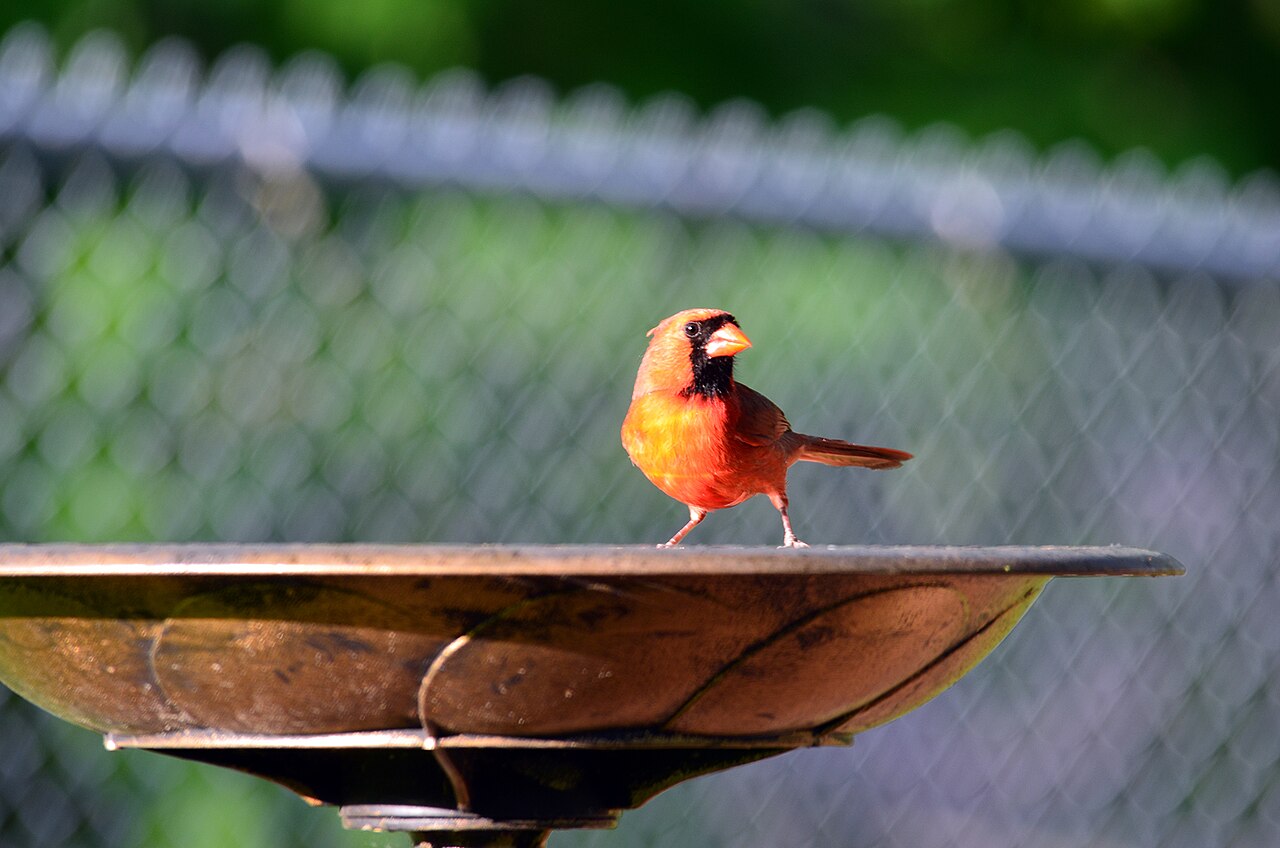
To attract birds to a feeder, start with black-oil sunflower seed, put the feeder in a quiet spot near shrubs or trees (but not so close that squirrels and cats can jump to it), add fresh water, and keep the feeder clean. Audubon calls food, water, and cover the three things that keep birds coming back [3].
Every tip below comes from the Cornell Lab of Ornithology’s Project FeederWatch, the National Audubon Society, the National Wildlife Federation, or the U.S. Fish and Wildlife Service. The numbered links point to the sources list at the end, so you can read the original advice yourself.
1. Start with black-oil sunflower seed
If you buy only one food, make it black-oil sunflower. Project FeederWatch calls it the most common seed offered at North American feeders. It is high in energy and has a thin shell, and it is a favorite of cardinals, chickadees, finches, and sparrows [1]. Audubon also says it appeals to the greatest number of birds [2].
Once birds are visiting, add variety, but put different foods in different feeders so less goes to waste [2]:
- Nyjer (“thistle”): draws goldfinches, Pine Siskins, and redpolls. It needs a feeder with very small ports, and it is best offered on its own rather than in a mix [1].
- Millet and cracked corn: scattered on the ground or a low platform, they suit juncos, sparrows, and doves [1].
- Suet: attracts insect-eating birds such as woodpeckers, nuthatches, chickadees, and wrens. Audubon advises hanging it at least five feet up and not putting plain suet out in hot weather, when it can turn rancid [2].
- Peanuts: offer them raw or roasted, but never salted or flavored [1].
Skip cheap blends heavy in milo. FeederWatch notes that most birds don’t favor milo and it often goes to waste, especially in the East [1]. Audubon says relatively few species prefer milo, wheat, or oats [2]. If you use a blend, look for sunflower, millet, and cracked corn, which Audubon calls the three most popular types of birdseed [2].
2. Pick a feeder that fits the birds you want
Different birds feed at different heights. Audubon’s rule of thumb is that sparrows, juncos, and towhees feed on the ground, finches and cardinals in shrubs, and chickadees, titmice, and woodpeckers in trees. Offering feeders at a few levels attracts more kinds of birds and reduces crowding [2].
- Tube feeder: keeps seed fairly dry. Short perches suit small birds like finches and keep out larger ones like grackles and jays [1]. Audubon says that if you hang just one feeder, this should be it [3].
- Hopper feeder: a covered box that keeps a large supply of seed dry. Large hoppers attract most feeder birds, including larger species like doves and grackles [1]. Audubon suggests a pole about 5 feet high or a tree branch [3].
- Platform or ground tray: attracts most feeder birds. Placed low, it is most likely to bring in juncos, doves, and sparrows. Choose one with drainage holes [1].
A simple first feeder: Audubon Red Barn Combo Seed Feeder (Model 6290)
A hopper-style “barn” with an attached “silo,” so you can offer two foods, such as sunflower in one side and a mix in the other, from one feeder. Hang it or mount it on a pole. Before you buy, check on the listing whether it comes apart for cleaning; FeederWatch recommends feeders that can be thoroughly washed [1].
Last checked available on Amazon · ASIN B00002N8FH · about $36 at last check (approximate). Confirm seller and stock on the product page. Check today’s price on Amazon.
See it on Amazon3. Put the feeder in the right place
- Quiet, visible, easy to refill. FeederWatch recommends a quiet area you can see easily and reach to refill [1].
- Near cover, but not too near. Shrubs and trees, especially evergreens, give birds somewhere to wait and hide. Branches too close become launch points for squirrels and cats, so FeederWatch suggests about 10 feet as a compromise [1]. Audubon gives the same 10-foot distance for pole feeders and ground trays [2][3].
- Very close to a window, or far from it. To reduce collisions, Audubon advises placing feeders within 3 feet of a window, or more than 30 feet away [3].
- Baffle the pole. A cone-shaped baffle at least 17 inches across, below a feeder about five feet up on a pole, is Audubon’s recommended squirrel defense [2]. FeederWatch calls baffles usually the best way to keep squirrels off your seed [1].
4. Add water and cover
Birds need water for drinking and bathing and are drawn to it just as they are to feeders. A simple birdbath or shallow dish works. FeederWatch says birds seem to prefer baths at ground level and that dripping water makes a bath more attractive. Change the water often, and never add antifreeze [1].
Cover matters as much as food. The National Wildlife Federation lists food, water, cover, and places to raise young as the four habitat essentials. It recommends native plants first, with a well-maintained feeder as a supplement [4]. FeederWatch also notes that loosely stacked brush piles near feeders give ground birds like Song Sparrows somewhere to escape [1].
5. Be patient, and keep it clean
We couldn’t find a sourced timeline for how quickly birds discover a new feeder, so keep it filled and give it time. Once birds arrive, a clean feeder helps keep them healthy:
- Seed and suet feeders: clean every week or two, and more often in heavy use or wet weather. Take the feeder apart, scrub with warm water and dish soap, rinse, and let it dry completely [1].
- Under the feeder: rake or sweep up droppings and spoiled seed regularly, and move feeders around now and then [1].
- Seed storage: keep seed in metal cans with tight lids in a cool, dry place. Damp seed can grow mold that harms birds [2].
- Sick birds: if you see fluffed-up, lethargic birds or birds with crusty eyes, clean more often and consider disinfecting or temporarily removing feeders [1].
6. Keep the birds you attract safe
The U.S. Fish and Wildlife Service lists cats and building glass among the top human-caused threats to U.S. birds. Its table (as of 2017) puts the median estimates at about 2.4 billion birds a year killed by cats and about 599 million by building glass [5]. Two things help most at a feeder:
- Keep cats indoors. Feeder birds are easy prey, and ground-feeding birds and fledglings are most at risk [1]. Audubon notes that bells on collars are usually ineffective [2].
- Mark your windows. FeederWatch recommends patterns such as dots or tape on the outside of the glass, spaced no more than 2 inches apart, or screens outside the window [1].
Name your visitors
Once birds show up, a field guide helps you work out who is visiting. It also makes your feeder a good place to practice before you head out with binoculars.
Sibley Field Guide to Birds of Eastern North America (2nd ed.)
Compact field guide covering birds east of the Rockies, with drawings and range maps. If you live west of the Rockies, get the Western edition instead.
Last checked In Stock on Amazon.com · ISBN-13 978-0307957917 · ASIN 0307957918 · about $13 at last check (approximate). Check today’s price on Amazon.
See it on AmazonReady to look farther afield? See binoculars for birding beginners or the full starter birding kit under $200.
Sources
- Project FeederWatch (Cornell Lab of Ornithology and Birds Canada), “Feeding Birds.” feederwatch.org/learn/feeding-birds/
- National Audubon Society, Steve Kress, “11 Tips for Feeding Backyard Birds.” audubon.org/magazine/11-tips-feeding-backyard-birds
- National Audubon Society, Steve Kress, “The Audubon Guide to Winter Bird Feeding.” audubon.org/magazine/audubon-guide-winter-bird-feeding
- National Wildlife Federation, “Habitat Essentials.” nwf.org/Native-Plant-Habitats/Plant-Native/Habitat-Essentials
- U.S. Fish and Wildlife Service, “Threats to Birds.” fws.gov/library/collections/threats-birds